
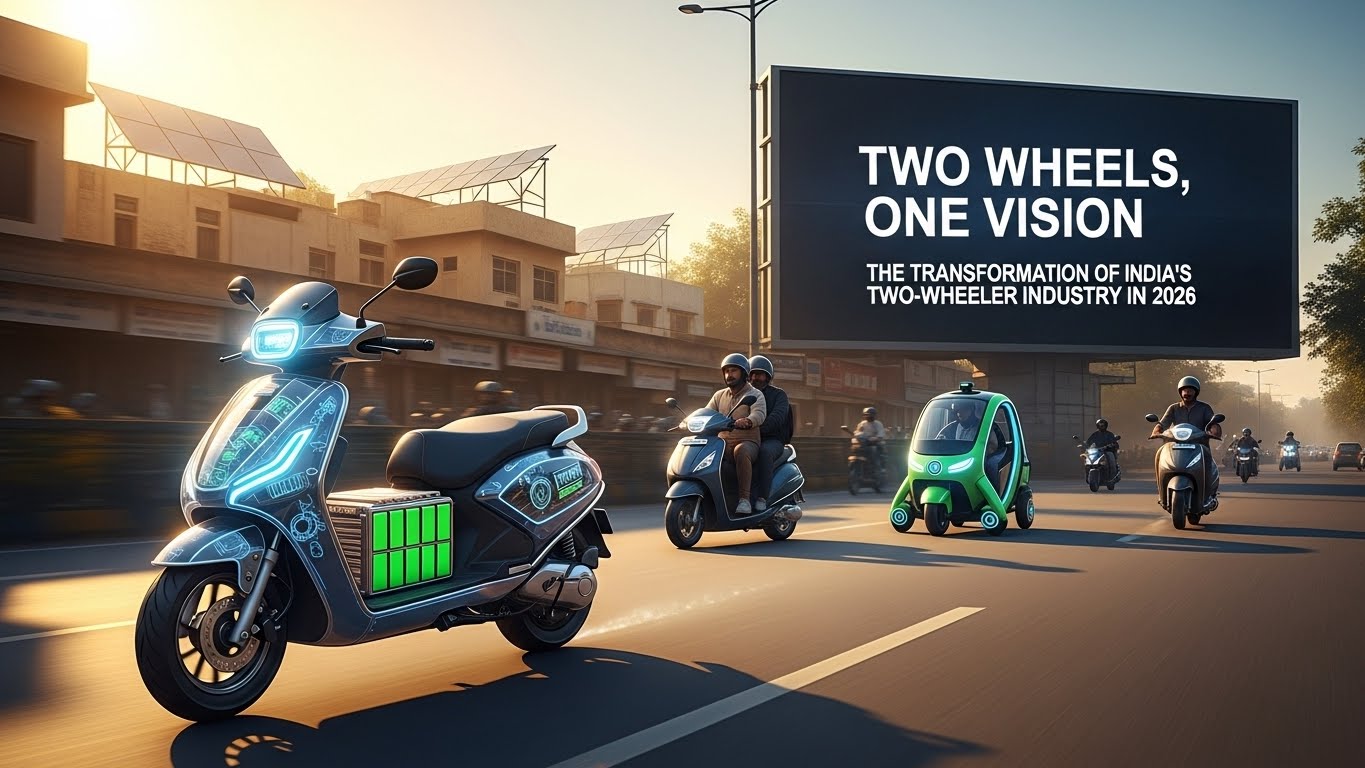
For decades, the two-wheeler has been the heartbeat of Indian mobility. From the ubiquitous 100cc commuter bikes of the 90s to the sleek, silent electric scooters of today, the journey of the “bike” mirrors the journey of India itself. As we navigate through 2026, the industry is no longer just about getting from point A to point B; it’s about aspirations, technology, and a green revolution.
Currently, India stands as the world’s largest manufacturer of two-wheelers, and this year, the sector is projected to grow by 6–9%. But numbers only tell half the story. The real narrative lies in the structural shift occurring beneath the surface—a shift from “utility” to “experience.”
1. The Electrification Tipping Point

If 2024 was the year of curiosity, 2026 is the year of adoption. The electric two-wheeler (E2W) segment has hit its stride, with penetration rates climbing toward 10% of new sales.
This surge is driven by a unique “perfect storm” of factors. Government support through modified GST structures—which saw rates slashed to 18% for most mid-range bikes—has made EVs competitive. More importantly, the Total Cost of Ownership (TCO) has become the deciding factor for the Indian middle class. With petrol prices remaining volatile, an e-scooter that costs roughly 20–30% less to operate over its lifetime is no longer a luxury—it’s a smart financial move.
Beyond the economics, the hardware is maturing. In 2026, we are seeing the mass-market introduction of multi-speed transmissions in electric motorcycles, which provide better range and hill-climbing ability—critical for India’s diverse terrain.
2. The Era of Premiumisation

There is a fascinating trend taking over the Indian streets: the “Commuter” is becoming an “Enthusiast.” The 100–125cc segment, once the undisputed king of the road, is facing stiff competition from the 150cc+ performance category.
| Segment | Growth Trend (2026) | Driver |
| Premium (250cc–450cc) | +13% YoY | Aspirational lifestyle & recreational touring |
| Executive (125cc–150cc) | Steady | Urban professionals seeking “tech-first” features |
| Commuter (<110cc) | Cyclical Recovery | Rural demand recovery post-monsoon |
Younger buyers are increasingly prioritizing safety and connectivity. Features that were once exclusive to luxury cars—such as Dual-channel ABS, Turn-by-Turn Navigation via Bluetooth, and even basic Traction Control—are now becoming standard in the 160cc-200cc motorcycle segment. Brands like TVS, Royal Enfield, and Bajaj are capitalising on this by offering “global” quality bikes designed for local conditions.
3. The Digital and Connected Ecosystem

In 2026, your bike is essentially a “mobile device on wheels.” The integration of telematics and AI has changed how we maintain our vehicles.
Predictive Maintenance: AI-driven sensors now alert riders about battery health or engine issues before a breakdown occurs, often booking a service appointment automatically via a mobile app.
The “Giga” Bundle: Financing has evolved. Many manufacturers now offer “Giga bundles” that combine the vehicle price, insurance, and even home charging electricity costs into a single monthly subscription.
The Rise of Smart Helmets: To complement the high-tech bikes, we are seeing a boom in the accessory market, with smart helmets featuring integrated HUDs (Head-Up Displays) and voice-activated SOS alerts becoming common sights on Indian highways.
4. Challenges: The Road Ahead
Despite the optimism, the road isn’t entirely smooth. The industry faces supply chain volatility, particularly regarding lithium and semiconductor chips, which continue to put pressure on manufacturing costs.
Furthermore, while urban India is rapidly installing charging stations, the Tier-III and rural areas still face a “charging desert.” The success of 2026 and beyond depends on how quickly the industry can deploy Battery Swapping Networks—a solution that fits the “quick-stop” culture of Indian commuters better than slow-charging plugs.
Final Thoughts
The Indian two-wheeler industry in 2026 is a testament to resilience and innovation. We have moved from being a market that simply “buys” to one that “defines.” Whether it’s the roar of a 350cc classic or the whir of a high-speed electric motor, the wheels of India are moving faster, cleaner, and smarter than ever before.
