
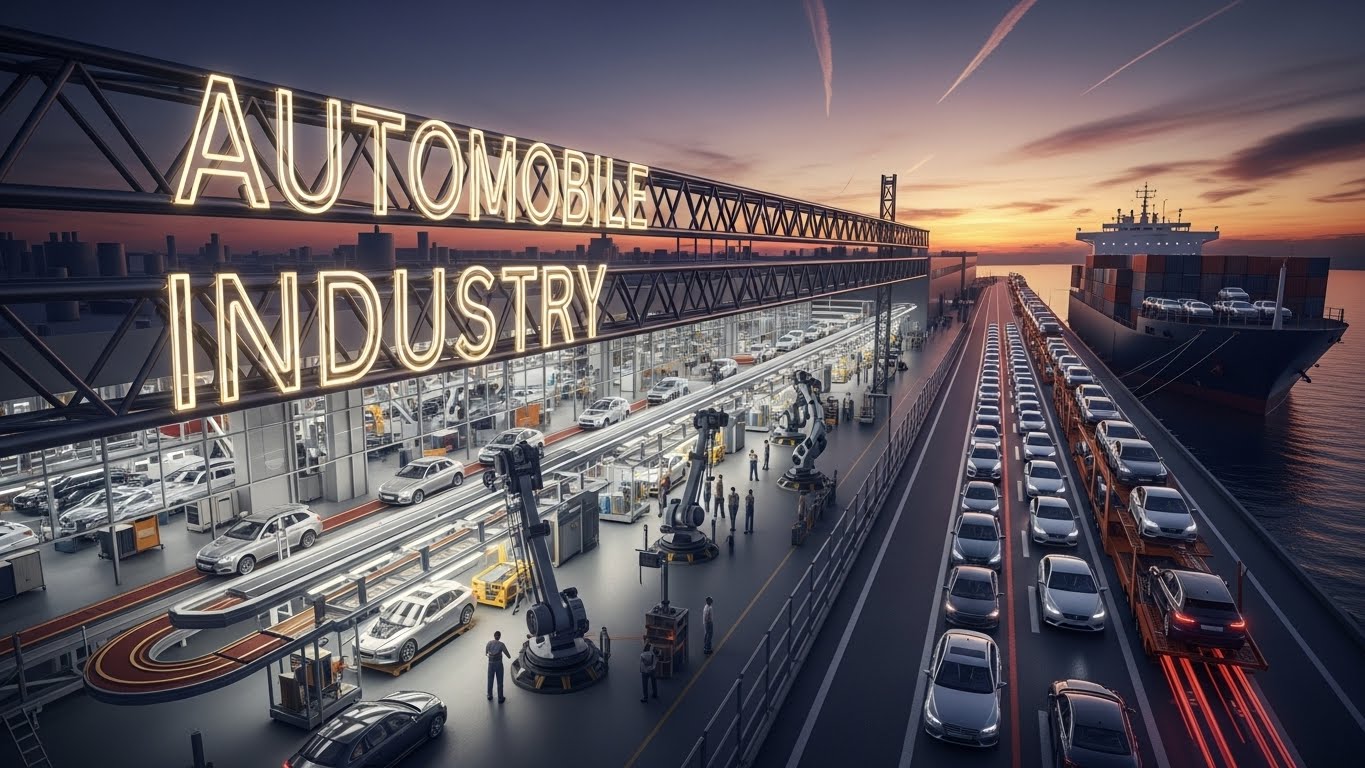
For decades, the Indian automotive industry was defined by the modest “family car.” Fast forward to 2026, and the landscape has transformed into a high-tech, multi-fuel battleground. Today, India is not just the world’s largest manufacturer of two-wheelers and tractors; it is a global R&D hub where the future of mobility is being written.
As the industry gears up to reach a valuation of $300 billion this year, here are the four major trends driving India’s automotive revolution.
1. The EV "Tipping Point"

2026 marks the year electric vehicles (EVs) officially moved from the “early adopter” phase to the mass market. While startups like Ola Electric and Ather paved the way, 2026 has seen the “legacy giants” unleash their full power.
Affordable Mainstream EVs: Maruti Suzuki’s entry into the segment with models like the e VITARA has addressed the “service anxiety” of small-town India.
The Charging Grid: With over 100,000 public charging stations now active across the country, range anxiety is finally taking a backseat.
Two-Wheeler Dominance: Nearly 25% of all new two-wheelers sold in India this year are electric, driven by the economic reality that running an e-scooter is now 80% cheaper than petrol.
2. The Rise of "Segment-Busting" SUVs

Indian consumers have made their choice clear: they want a “commanding” view of the road. Mid-size SUVs have officially overtaken hatchbacks as the largest selling segment in India.
| Popular Segment 2026 | Key Players | Defining Feature |
| Mid-size SUVs | Tata Curvv, Hyundai Creta, Mahindra XUV700 | Level 2 ADAS (Advanced Driver Assistance Systems) |
| Micro-SUVs | Tata Punch, Hyundai Exter | High ground clearance at hatchback prices |
| Luxury EVs | Mercedes-Benz EQ Series, BMW iX | Record sales in Tier-2 cities like Ludhiana and Surat |
3. Beyond Batteries: The Green Hydrogen Frontier

While EVs dominate the city, India is looking at Green Hydrogen for the long haul. Under the National Green Hydrogen Mission, 2026 has become a “pilot year” for heavy-duty transport.
Hydrogen Vande Bharat: Indian Railways has begun trials of hydrogen-powered trains, aiming for a carbon-neutral footprint.
Commercial Trucks: Ashok Leyland and Tata Motors have deployed the first fleet of hydrogen-powered heavy trucks on the Delhi-Mumbai Expressway.
Ethanol Blending: India has successfully achieved 20% Ethanol Blending (E20) across most fuel stations, significantly reducing the country’s crude oil import bill.
4. The "Software-Defined" Vehicle

In 2026, an Indian car is more like a smartphone on wheels. The focus has shifted from “Horsepower” to “Processing Power.”
Connected Tech: Features like remote engine start, AI-based voice assistants in regional Indian languages, and over-the-air (OTA) software updates are now standard even in mid-range cars.
Safety First: Influenced by the Bharat NCAP ratings, Indian car buyers now prioritize 6 airbags and structural integrity over fuel mileage—a massive cultural shift in the Indian market.
Pro Tip: If you’re looking to buy a car in 2026, check the Resale Value Index for EVs. With battery recycling plants now operational in India, the long-term value of electric cars has stabilized significantly.
Conclusions
The Indian automobile industry is no longer a follower of global trends—it is a creator of them. By balancing affordable engineering with cutting-edge green tech, India is well on its way to achieving the Automotive Mission Plan (AMP 2026) goal: becoming one of the top three automotive industries in the world.
