
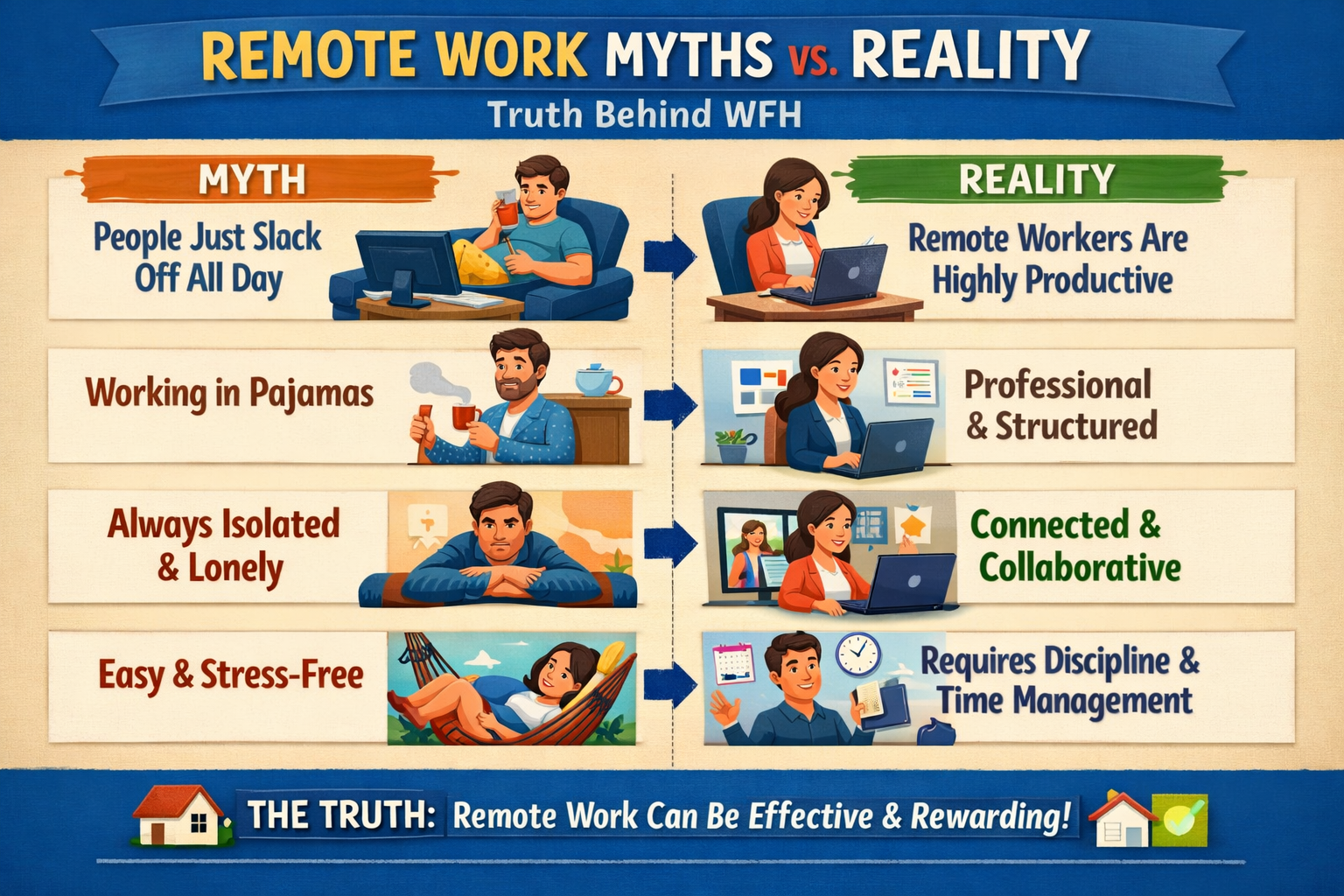
Remote work myths vs reality is a topic that has gained a lot of attention in recent years, especially after many companies in India adopted work-from-home and hybrid models. While remote work sounds attractive, there are many assumptions and misunderstandings around it. Some people believe remote work is easy and relaxed, while others think it reduces productivity. To truly understand this work style, it is important to explore myths vs reality and also look closely at common remote outsourcing myths.
This blog breaks down popular beliefs, compares them with real experiences, and explains what remote work actually looks like in everyday professional life.
Understanding Remote Work Myths vs Reality
The concept of remote work is simple—working outside a traditional office, often from home. However, remote work myths vs reality shows that the experience is not the same for everyone. While some professionals enjoy flexibility and independence, others face challenges like isolation and time management issues.
Similarly, remote outsourcing myths create confusion for businesses that want to hire remote talent. Many decision-makers hesitate due to incorrect assumptions rather than facts.
Myth 1: Remote Work Means Less Work

One of the most common ideas in remote work is that people work less when they are at home. The reality is quite different. Many remote workers in India report working longer hours than they did in offices.
Without clear boundaries, work often spills into personal time. Emails, calls, and messages continue beyond regular hours. This proves that remote work myths vs reality is not about doing less work, but about managing time better.
Myth 2: Remote Workers Are Not Productive

Another popular belief in remote work is that employees are less productive outside the office. In reality, many studies and real-life examples show improved productivity due to fewer distractions like office noise and unnecessary meetings.
When people work in a comfortable environment, they often focus better. The key difference highlighted in remote work myths vs reality is that productivity depends on discipline and clear goals, not physical location.
Myth 3: Remote Work Is Only for IT Professionals

This is one of the outdated myths vs reality discussions. Earlier, remote work was mainly linked to IT jobs, but today professionals from marketing, finance, education, customer support, and design are working remotely.
Similarly, remote outsourcing myths suggest that only technical tasks can be outsourced. In reality, content writing, HR services, accounting, and even legal research are now handled remotely.
Myth 4: Remote Work Offers Complete Freedom
It often show remote work as total freedom with flexible hours and no rules. In reality, remote work still requires schedules, deadlines, and accountability.
Many remote workers follow fixed working hours to align with teams or clients. The reality in remote work is that flexibility exists, but responsibility increases.
Myth 5: Communication Is Always Difficult
Poor communication is frequently mentioned in remote work myths vs reality. While remote teams do not meet face-to-face, technology bridges the gap effectively. Video calls, project management tools, and instant messaging help teams stay connected.
Remote outsourcing myths also suggest that communication gaps lead to delays. However, structured workflows and proper documentation solve most issues. The reality is that communication improves when it is planned and transparent.
Remote Outsourcing Myths vs Reality for Businesses
Many business owners believe that outsourcing work remotely leads to quality issues. This is one of the biggest remote outsourcing myths. The reality is that remote outsourcing allows access to skilled professionals across different cities and countries.
Remote work myths vs reality shows that businesses can reduce costs while maintaining quality, provided they choose the right talent and communication tools. Clear expectations and regular reviews help ensure smooth collaboration.
Mental Health and Remote Work
Another important part of remote work is mental health. Some believe remote work reduces stress, while others feel it increases loneliness. The truth lies in balance.
Remote work can reduce travel stress and allow more family time. However, lack of social interaction can affect mental well-being. The reality in remote work is that individuals must actively maintain routines, breaks, and social connections.
Remote Outsourcing Myths About Job Security

One of the major remote outsourcing myths is that outsourcing replaces full-time jobs. In reality, remote outsourcing creates new opportunities for freelancers and consultants across India.
Remote work myths vs reality shows that outsourcing supports businesses while offering flexible income options to professionals. It is not about job loss but about changing work models.
Work-Life Balance: Myth or Reality?
Many people think remote work automatically improves work-life balance. According to remote work myths vs reality, this is only true when boundaries are set clearly.
Without discipline, work-from-home can lead to burnout. The reality is that remote work offers balance only when individuals manage time effectively and avoid overworking.
Future of Remote Work Myths vs Reality in India
The future of work in India will continue to include remote and hybrid models. This discussions will slowly fade as more people gain real experience.
Similarly, remote outsourcing myths will reduce as businesses see long-term benefits. Companies are learning that trust, performance tracking, and communication matter more than office presence.
Refer for more similar ideas: https://gajlynk.shop/solo-entrepreneur-examples-how-solopreneurs-are-building-6-figure-businesses-in-india/
Conclusion
Remote work myths vs reality clearly shows that remote work is neither perfect nor problematic by default. It is a practical work model with its own advantages and challenges. Understanding remote outsourcing myths helps businesses and professionals make informed decisions.
By accepting reality instead of myths, individuals can build productive careers, and companies can create efficient remote teams. Remote work is not about where you work from, but how you work.