
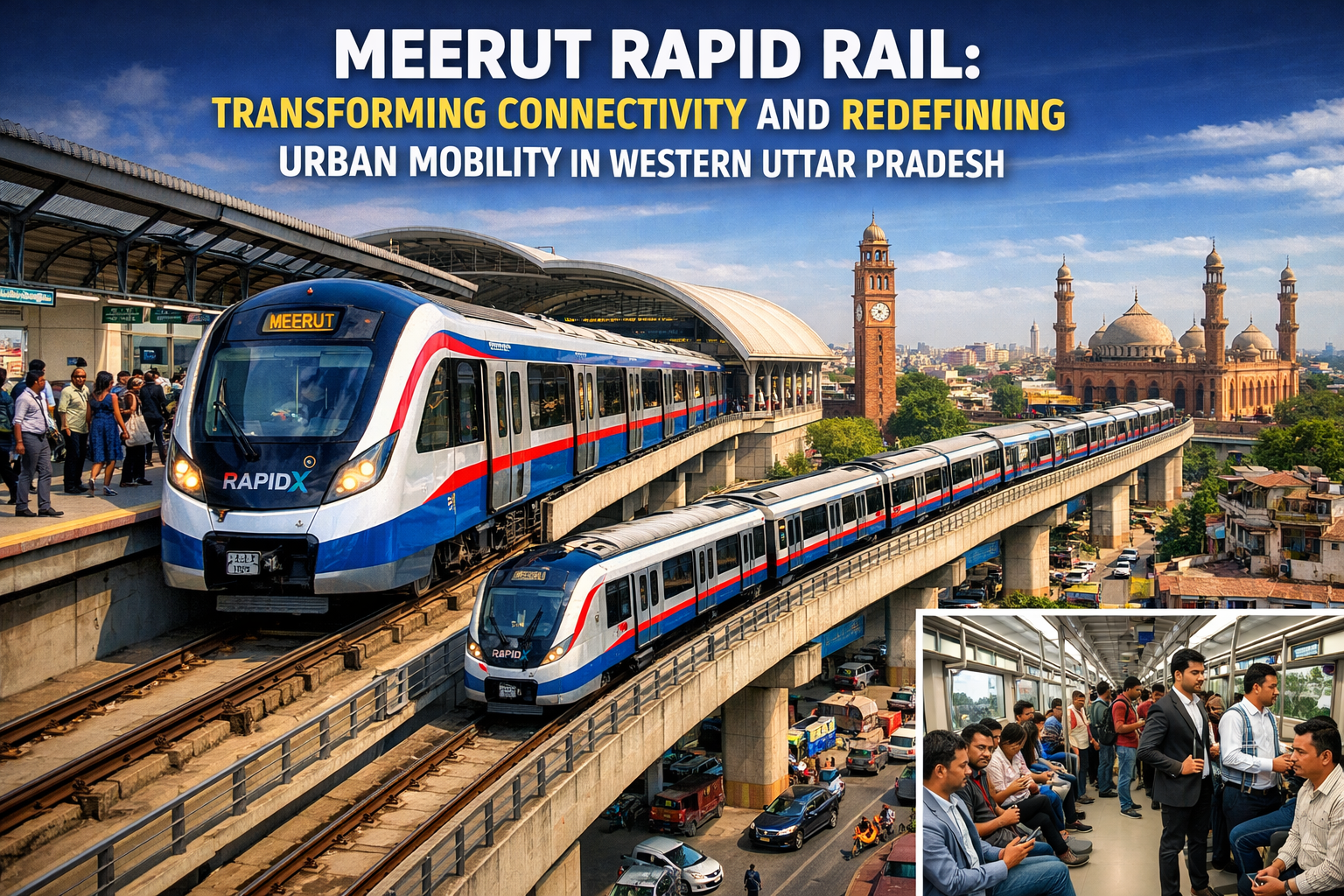
The Meerut rapid rail map has become a topic of major interest for commuters, investors, and residents of western Uttar Pradesh. Moreover, this ambitious project is part of India’s first Regional Rapid Transit System (RRTS) and is set to change the way people travel between Delhi and Meerut. In addition, by clearly outlining routes, stations, and key connections, the Meerut rapid rail shows a future of faster, safer, and more comfortable travel. The National Capital Region Transport Corporation is implementing the project, reflecting India’s growing focus on modern public transport and planned urban development.
Table of Contents
ToggleMeerut Rapid Rail Map and Faster Travel Experience
According to the Meerut rapid rail map, the Delhi–Meerut corridor stretches about 82 kilometres and passes through important urban centres such as Ghaziabad. Once fully operational, the system will reduce travel time between Delhi and Meerut to less than one hour. In contrast, this journey currently takes 2 to 3 hours during peak traffic due to road congestion and overcrowded trains.
Engineers have designed the trains on this corridor to run at speeds of up to 160 km/h. The Meerut rapid rail highlights how this high-speed system will act as a strong transport backbone for the region. As a result, daily commuters can expect less travel stress, better time management, and an improved quality of life.
Modern Commuting Shown in the Meerut Rapid Rail Map
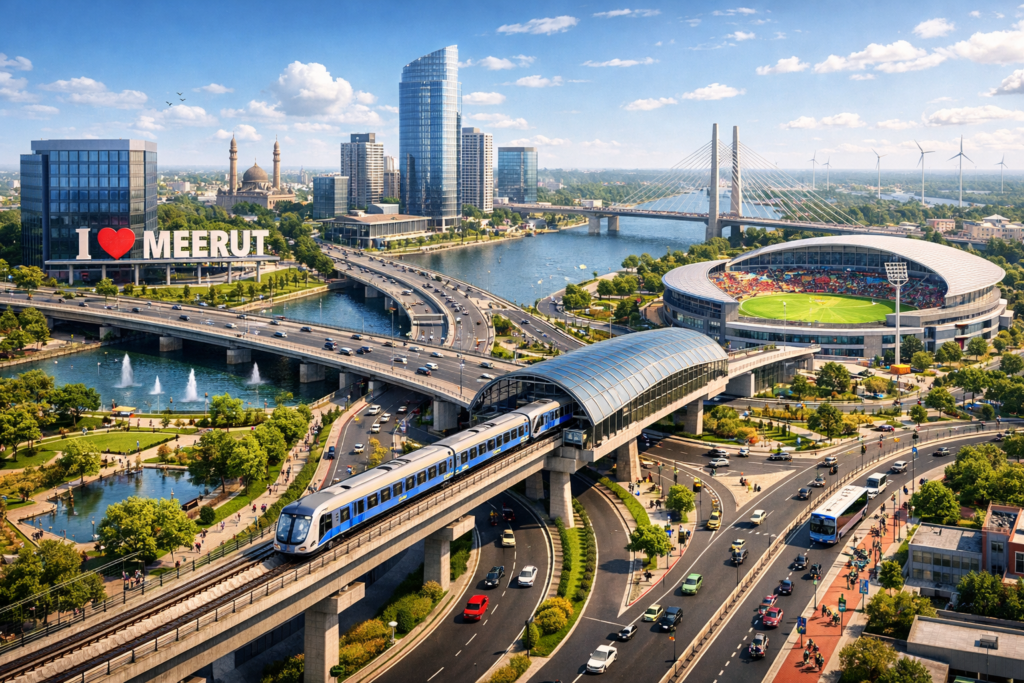
The Meerut rapid rail map does not just show routes; it represents a modern commuting experience. The project equips Rapid Rail trains with air-conditioned coaches, comfortable seating, mobile charging points, Wi-Fi connectivity, and CCTV surveillance. These features ensure that passengers enjoy a safe and pleasant journey.
Furthermore, advanced signalling systems and well-planned stations play a key role in maintaining safety and efficiency. Dedicated seating for women and facilities for differently-abled passengers reflect the inclusive design of the project. The rapid rail map clearly shows station locations that are easy to access and well connected to nearby areas.
Economic Growth Reflected Through the Meerut Rapid Rail Map
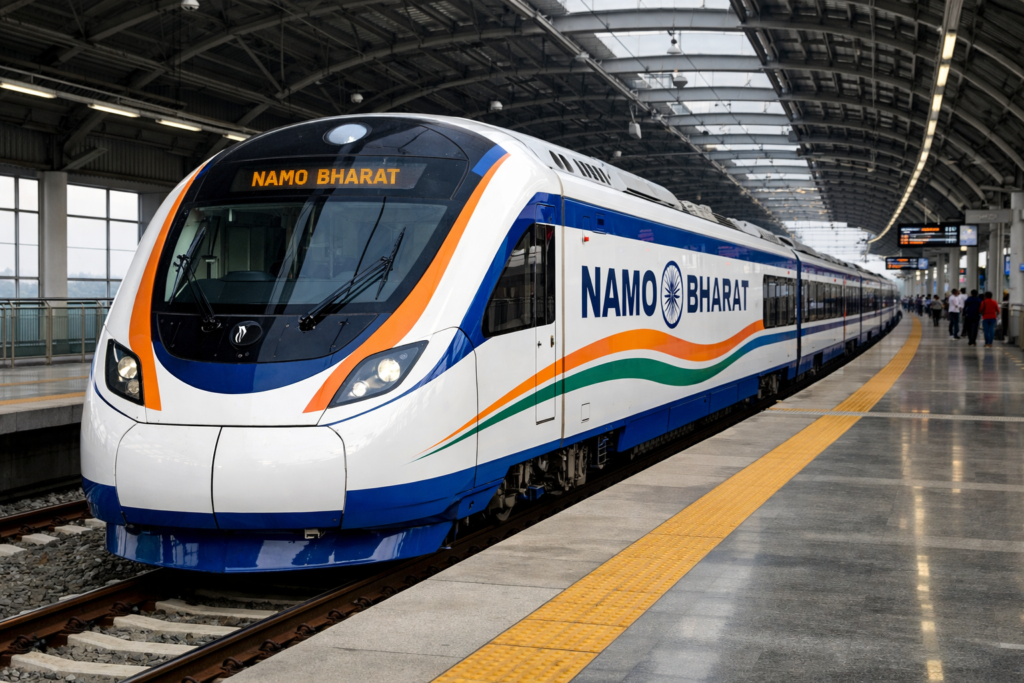
Additionally, the Meerut rapid rail map indicates strong potential for economic growth and regional development. Improved connectivity between Meerut and Delhi allows professionals to live in Meerut, where housing is more affordable, while working in Delhi. This reduces pressure on Delhi’s infrastructure and supports balanced regional growth. Also check about WFH reality.
Developers are already showing increased interest in areas near Rapid Rail stations. The Meerut rapid rail has become an important reference for real estate planning, as Experts expect residential projects, commercial spaces, and retail hubs to grow along the corridor. This development will generate employment and boost local businesses.
Meerut Rapid Rail Map and Impact on Local Industries
Meerut is well known for its sports goods and manufacturing industries. The Meerut rapid rail map shows how improved transport links will help these industries access larger markets within the National Capital Region (NCR). Consequently, faster movement of goods and people will reduce logistics costs and improve efficiency.
Improved connectivity will significantly benefit small and medium businesses in the region. With better connectivity, Meerut can attract more investment, skilled professionals, and business opportunities, strengthening its role in the regional economy.
Environmental Benefits Highlighted by the Meerut Rapid Rail Map
The Meerut rapid rail map also represents a move towards sustainable urban development. By encouraging people to shift from private vehicles to public transport, the project will help reduce road congestion. Fewer vehicles on the road mean lower fuel consumption and reduced carbon emissions.
Similarly, energy-efficient train systems and eco-friendly station designs further improve the project’s environmental impact. Over time, this shift can contribute to better air quality and a healthier living environment for residents of western Uttar Pradesh.
Vision of Modern Infrastructure in the Meerut Rapid Rail
The Meerut rapid rail map reflects a larger vision of integrated urban infrastructure in India. The system combines regional high-speed travel with metro-like services within Meerut. Planners have carefully designed elevated, underground, and at-grade sections to ensure smooth operations while minimising disruption during construction.
In addition, multimodal integration is another key feature. According to the map, authorities will connect stations with buses and other local transport options to improve last-mile connectivity. Digital ticketing and smart card systems will make travel simpler and faster for passengers.
Challenges and Progress Along the Meerut Rapid Rail
Large infrastructure projects often face challenges such as land acquisition, construction delays, and coordination issues. The Meerut rapid rail, however, reflects steady progress and strong institutional commitment. Regular updates and visible construction activity have increased public confidence in the project.
At the same time, authorities are working to address challenges efficiently so that the project can be completed within planned timelines. Once fully operational, the system will set an example for future rapid rail projects across India.
Meerut Rapid Rail and Changing Commuting Patterns
The project will reshape daily commuting habits. Students, office workers, and business travellers will benefit from predictable travel times and improved comfort. Therefore, over time, this reliability can encourage more people to choose public transport over private vehicles.
This change in behaviour supports long-term urban planning goals and helps cities grow in a more organised manner.
Conclusion
Overall, the Meerut rapid rail map is more than a route guide—it is a blueprint for progress in western Uttar Pradesh. By offering faster travel, modern facilities, economic growth, and environmental benefits, the project represents a major step forward in India’s transport infrastructure.
As the Meerut Rapid Rail becomes fully operational, it will not only connect Delhi and Meerut but also redefine urban mobility for millions of people. With the rapid rail guiding this transformation, the region is moving towards a future marked by speed, efficiency, and sustainable development.